
Hurry or Truly Busy?
Rethinking Productivity in Agile Transformation
One of the first things people notice during an Agile transformation is the surge of energy. Collaboration becomes easier, silos begin to fade, boards come alive, and people immerse themselves in work with visible enthusiasm. There’s motion everywhere: meetings, updates, discussions, reflections. The workplace feels vibrant, fast, and filled with momentum.
Yet activity alone doesn’t answer the most important question: Are we truly productive… or merely in a hurry?
It’s surprisingly easy for a team to look busy while creating very little value. I’ve seen organizations move fast, only to discover that their pace wasn’t progress, it was just motion.
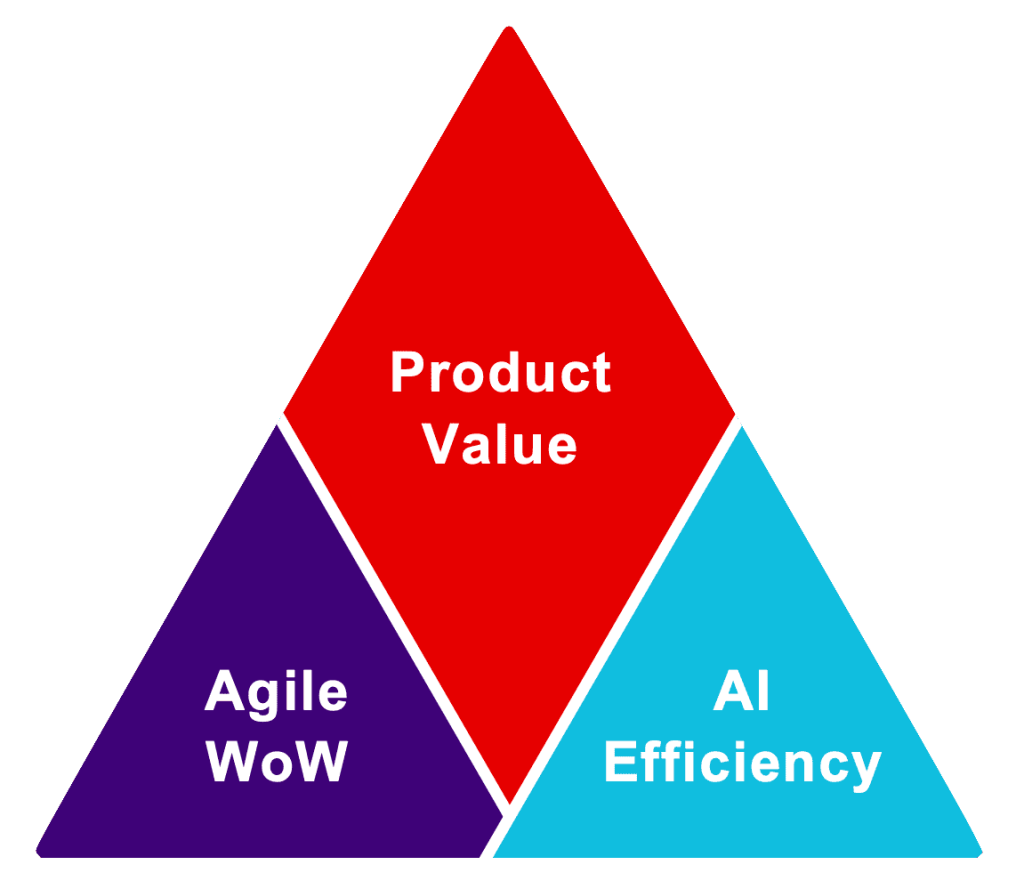
The PMxAI Triangle
When Teams Are Simply in a Hurry
At first glance, such teams appear impressive. Calendars are full, discussions are constant, Agile ceremonies always happen on schedule. But underneath the surface, value is stagnant. Learning is slow. Output rises without meaningful outcomes. People are exhausted, yet the impact doesn’t match the effort.
This usually happens when the work is driven by pressure rather than purpose, when leaders are satisfied by visible activity instead of measurable results, or when teams follow Agile ceremonies without adopting an Agile mindset. Sometimes the problem is even more fundamental: the challenge they are solving simply isn’t meaningful or tied to outcomes that matter.
In those situations, Agile becomes performance art. The rituals are there, the activity is visible, and everything looks busy. But progress is minimal. Being in a hurry feels like productivity—but it isn’t.
When Teams Are Truly Busy
There is another kind of team. They are equally active, but everything about them feels different. Their work is tied to real customer problems and strategic priorities. Their environment removes friction instead of adding to it. They operate with clarity, autonomy, alignment, and purpose. And their results speak for themselves.
Their progress is visible in every iteration, not through volume of output, but through tangible outcomes. They learn faster, improve continuously, deliver predictably, and build capability over time. Their leaders don’t demand more activity; they enable more impact. Their conversations focus less on tasks and more on value. And instead of working to appear busy, they work to make a difference.
When those conditions are present, productivity doesn’t just rise—it compounds.
A Contrast You Can Feel
I’ve witnessed both realities many times.
When motivated teams tackle meaningful problems in a truly Agile environment, their productivity accelerates and morale strengthens. But when equally motivated teams are given artificial work, restrained by non-Agile governance, or pressured to “look busy,” their productivity deteriorates quickly, regardless of how busy they appear.
Speed and rituals can be deceiving. Agile isn’t defined by how fast the work moves or how many events take place. It is defined by the flow of value. If value is not moving, then neither is the organization.
The Difference in Mindset
Teams that are merely hurrying tend to talk about tasks instead of outcomes. Decisions multiply in meetings instead of being made through insight. Time is spent doing more instead of learning more. Output happens—but results don’t.
Truly busy teams think differently. They work with clarity about who they serve, why the work matters, and how it connects to larger goals. They use data to learn rather than justify. They invite visibility, they surface problems early, and they solve them quickly. Their sense of “busy” is rooted in value, not volume.
High-performance teams are not accidental. They emerge when organizations are designed intentionally, leadership is supportive, and governance reinforces focus rather than control.
This is precisely where roles like Project Manager, Program Manager, and PMO prove their worth. They don’t stifle agility—they enable it.
Governance, Elevated
Agile isn’t the absence of governance. It is the evolution of governance.
Successful organizations make it possible for teams to prioritize the right problems, align capacity with strategy, visualize value delivery, and make informed decisions about risk, cost, and schedule. Instead of reinforcing functional silos, they build portfolio alignment. Instead of emphasizing speed, they emphasize learning, outcomes, and adaptation.
In an era shaped by AI, product thinking, and Agile ways of working, these roles are more important than ever.
The PMxAI™ Project Track
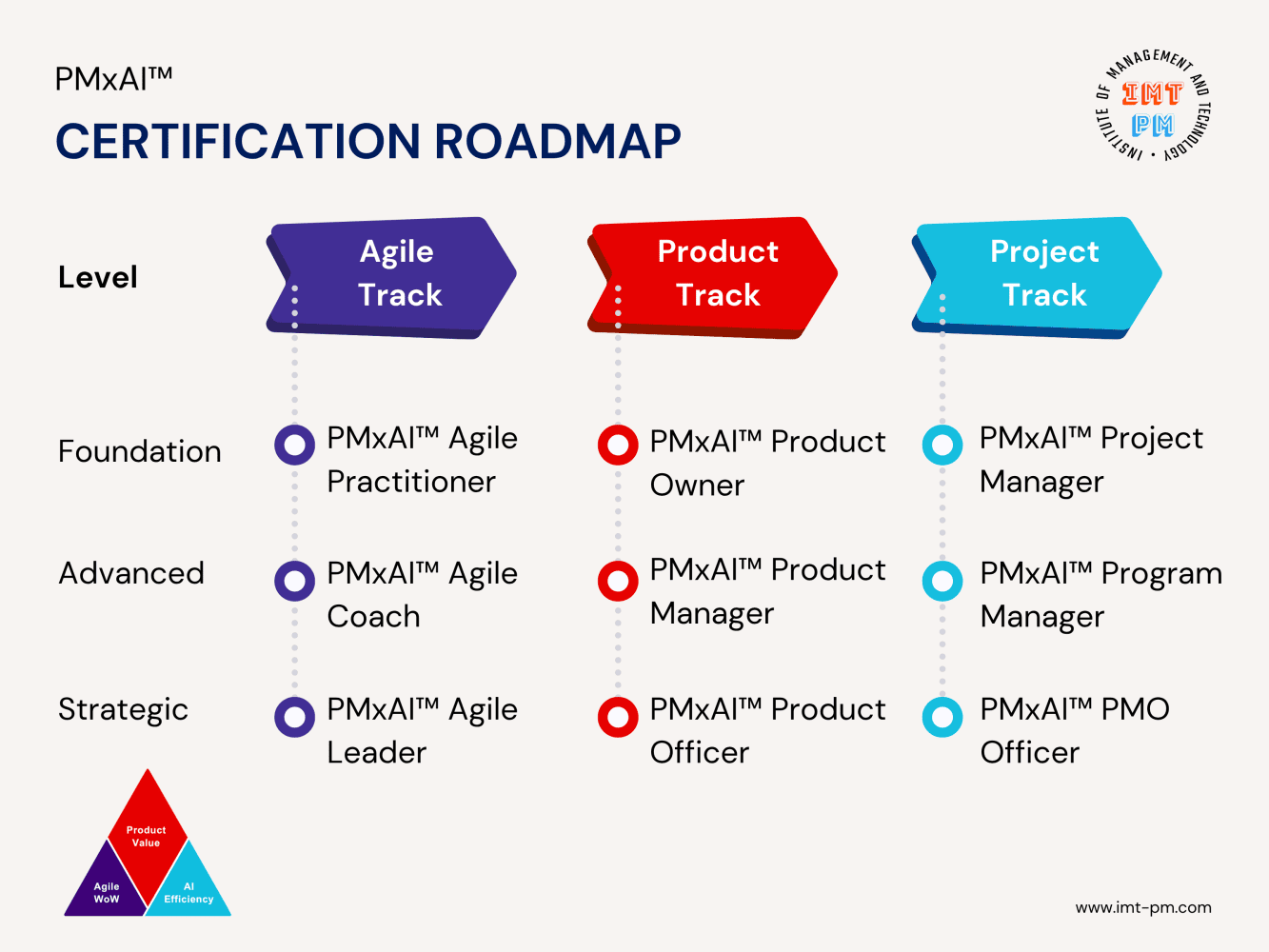
That is why the PMxAI™ Certification Roadmap includes a Project Track dedicated to elevating delivery leaders:
PMxAI™ Project Manager— applying AI to scope, schedule, cost, and risk to improve decisions and outcomes.
PMxAI™ Program Manager— orchestrating multiple initiatives with portfolio insights and benefits realization.
PMxAI™ PMO Officer — establishing AI-augmented governance, reporting, and strategic execution at scale.
Each role contributes to the same purpose: creating environments where teams are not just in motion, but delivering real value.
Closing Thought
Movement is easy. Progress is difficult.
Agile transformation succeeds when teams stop rushing and start focusing on outcomes, learning, and improvement. When they become truly busy—not with ceremonies, not with noise, but with value.
And when that happens, transformation stops being a slogan and becomes a lived reality.

Related posts

New PMP Exam Goes Live in July 2026 – Why You Should Earn Your PMP® Before the New Exam Launches