Domain 1: Project Management Fundamentals and Core Concepts
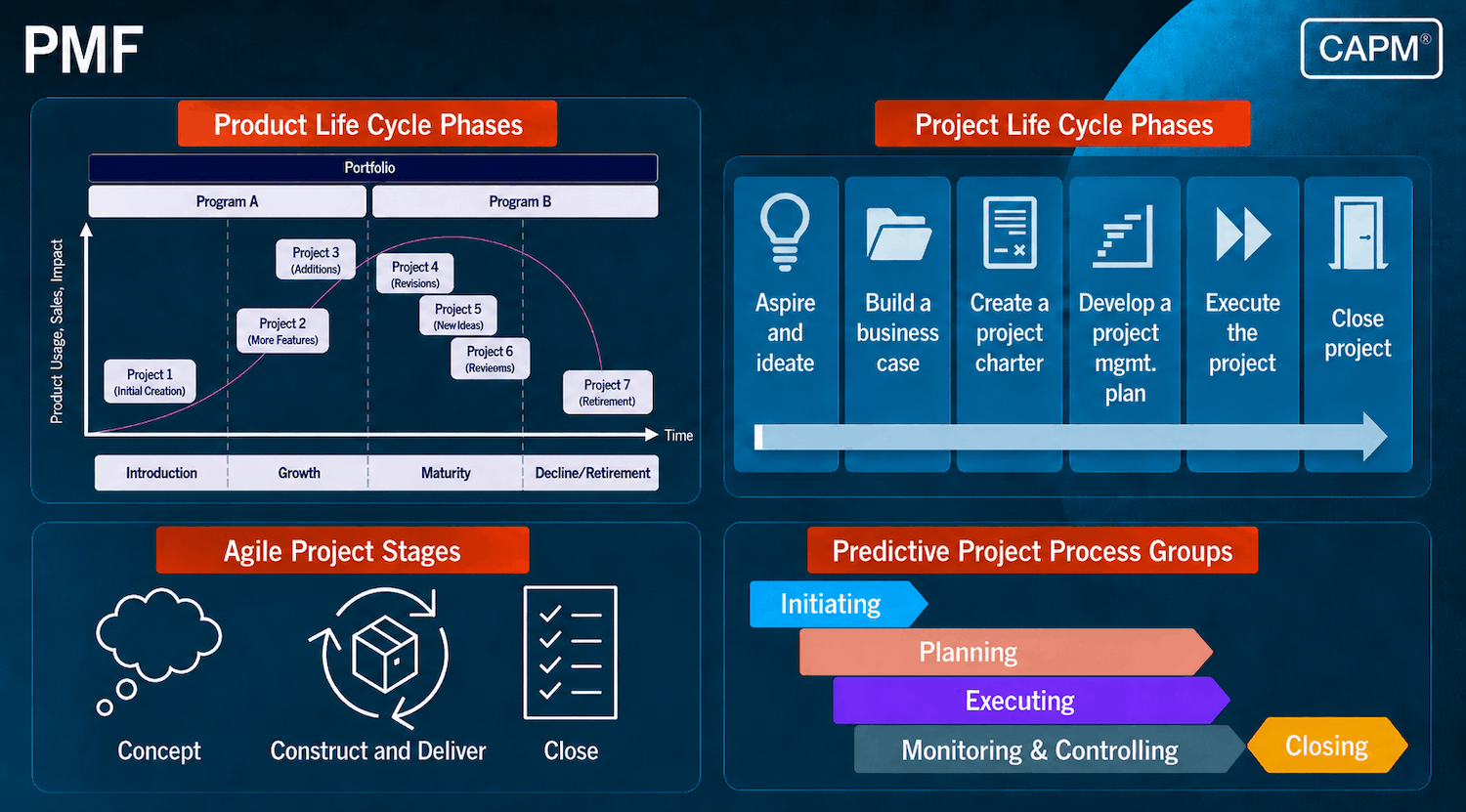
- Demonstrate an understanding of the various project life cycles and processes.
- Distinguish between predictive and adaptive approaches.
- Demonstrate an understanding of project management planning.
- Demonstrate an understanding of project roles and responsibilities.
- Explain the importance of the role the project manager plays
- Determine how to follow and execute and respond to planned strategies or frameworks—e.g., communication, risks, etc.
- Demonstrate an understanding of common problem-solving tools and techniques.
Domain 2: Predictive, Plan-Based Methodologies
- Identify the suitability of a predictive, plan-based approach for the organizational structure (e.g., virtual, colocation, matrix structure, hierarchical, etc.).
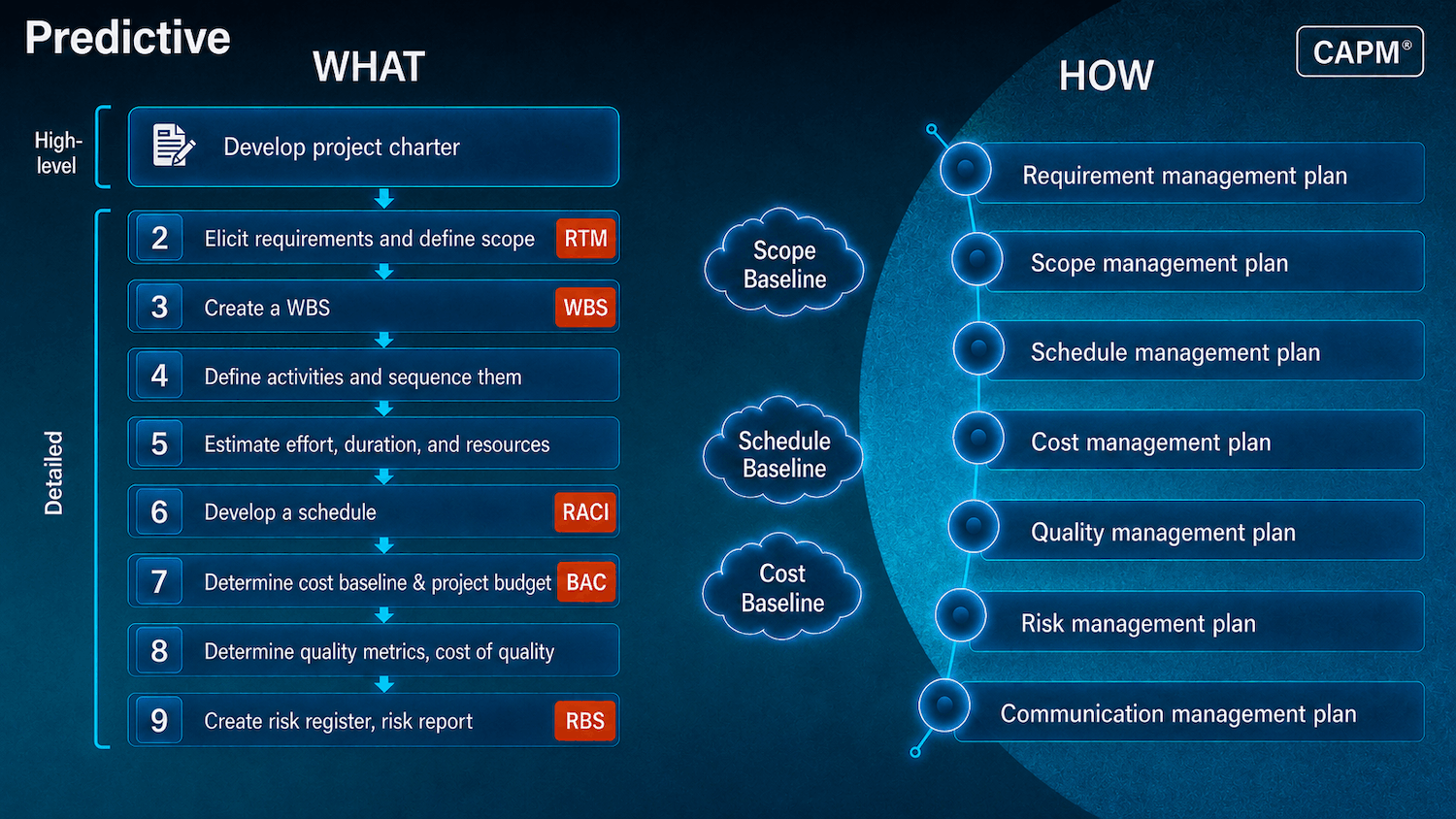
- Determine and give examples of the activities within each process.
- Demonstrate an understanding of a project management plan schedule.
- Determine how to document project controls of predictive, plan-based projects.
Domain 3: Agile Frameworks
- Explain when it is appropriate and sustainable to use an adaptive approach for the organizational structure.
- Compare the pros and cons of adaptive and predictive, plan-based projects.
- Identify the suitability of adaptive approaches for the organizational structure (e.g., virtual, colocation, matrix structure, hierarchical, etc.).
- Identify organizational process assets and environmental factors that facilitate the use of adaptive approaches.
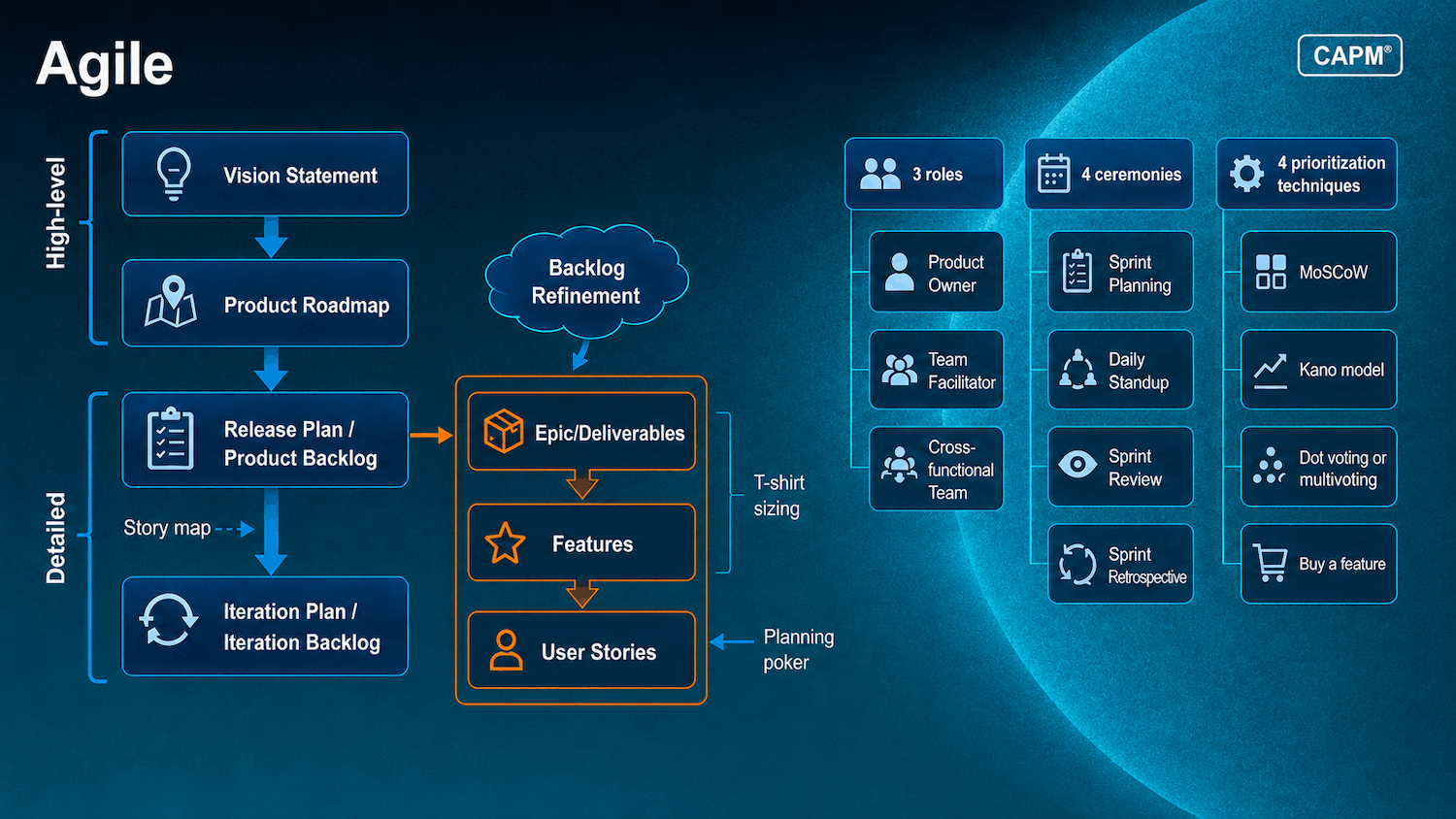
- Determine how to plan project iterations.
- Determine how to document project controls for an adaptive project.
- Distinguish between the components of different adaptive methodologies (e.g., Scrum, Extreme Programming (XP), Scaled Adaptive Framework (SAFe®), Kanban, etc.).
- Determine how to prepare and execute task management steps.
Domain 4: Business Analysis Frameworks
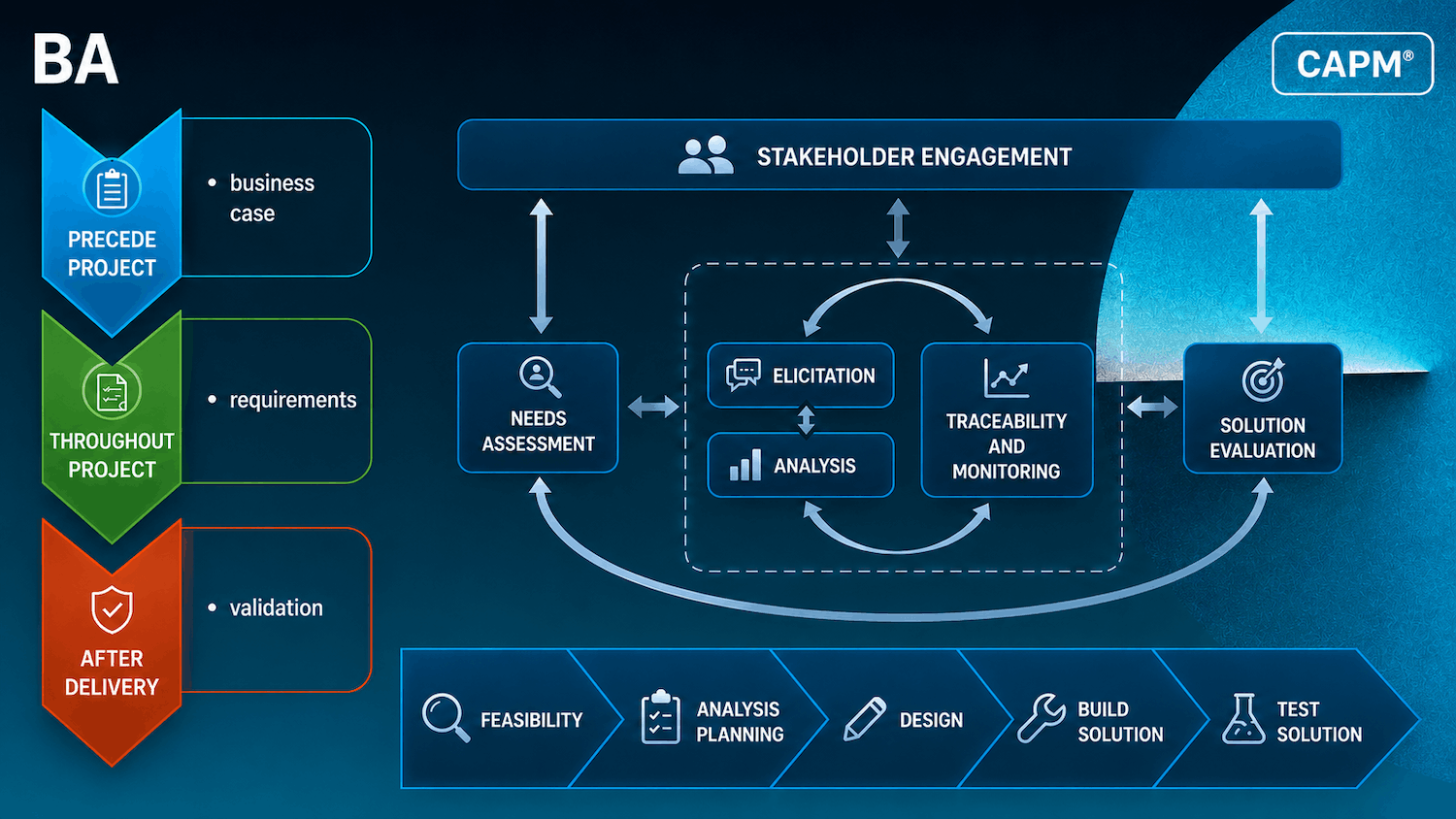
- Demonstrate an understanding of business analysis (BA) roles and responsibilities.
- Demonstrate the importance of stakeholder and team communication to the business analyst role.
- Determine how to gather requirements and using the best approach for a situation.
- Explain the application of a product roadmap.
- Determine how project methodologies influence business analysis processes.
- Validate requirements through product delivery.
Check out the available schedule for instructor-led classes here.